
Case Study
Hunters View HOPE SF
San Francisco, CA
2013-2017
Challenges:
Minimizing displacement, multiple scales of intervention, existing community
When HOPE SF, a program to revitalize the city’s forgotten and neglected low-income neighborhoods, set out to renew Bayview Hunters Point on the southeastern tip of San Francisco, the area had long fallen into disrepair. Its main affordable housing development was ranked worst in the country in a 2007 survey by the federal Department of Housing and Urban Development, and San Francisco’s then-mayor Gavin Newsom said he considered it to be one of the worst examples of poverty concentrating in public housing. The solutions to these problems would have to be holistic and visionary—and, in alignment with HOPE SF’s values, shared by Paulett Taggart Architects, they’d have to prioritize social equity, community benefit, and minimizing resident displacement.
The developers for Hunters View—the John Stewart Company, Devine & Gong, and the Ridge Point Non-Profit Housing Corporation—engaged W.R.T. Solomon E.T.C. to compose a plan for the neighborhood. This plan would replace all 267 of the low-income units already found on the site, add 530 new market-rate rentals and condos, and, importantly, ameliorate the localized feeling of isolation. This last goal was crucial to the vision shared by the developers, the planners, HOPE SF, and the city—part of the reason the area had suffered so much, they figured, was that it wasn’t meaningfully linked to its surroundings. The master plan architects began their plan by extending the city grid over the entire parcel, reestablishing crucial connections via the north-south Middle Point Road and the east-west Fairfax Avenue. They also incorporated two large parks: Promontory Park, on a hilltop overlooking downtown San Francisco from the northwest corner of the site, and Panhandle Park, running through three blocks of Fairfax Avenue
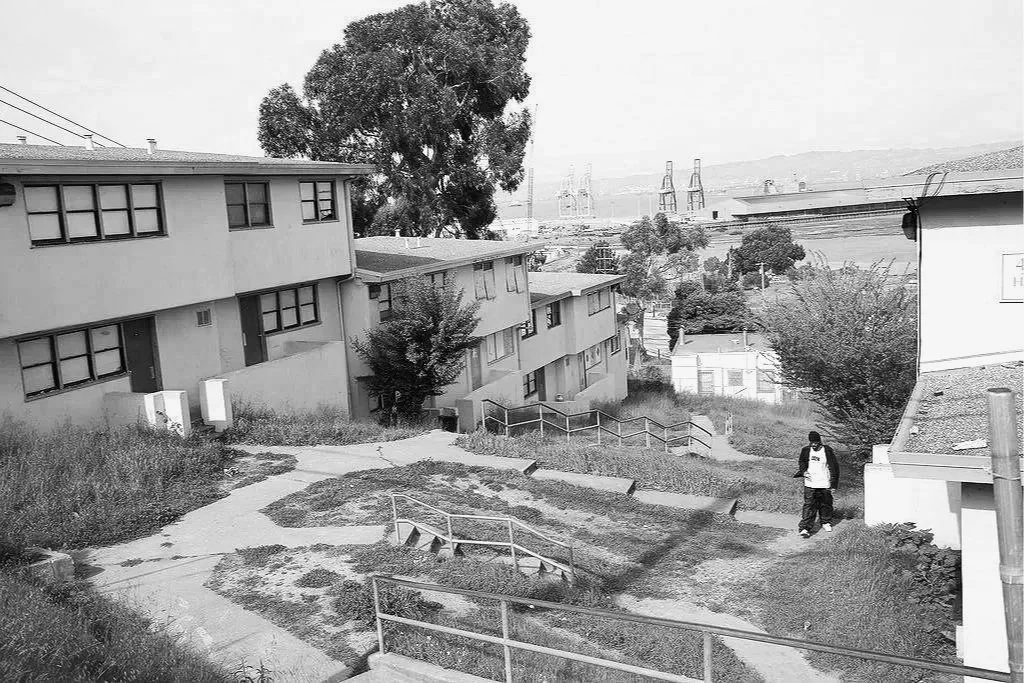

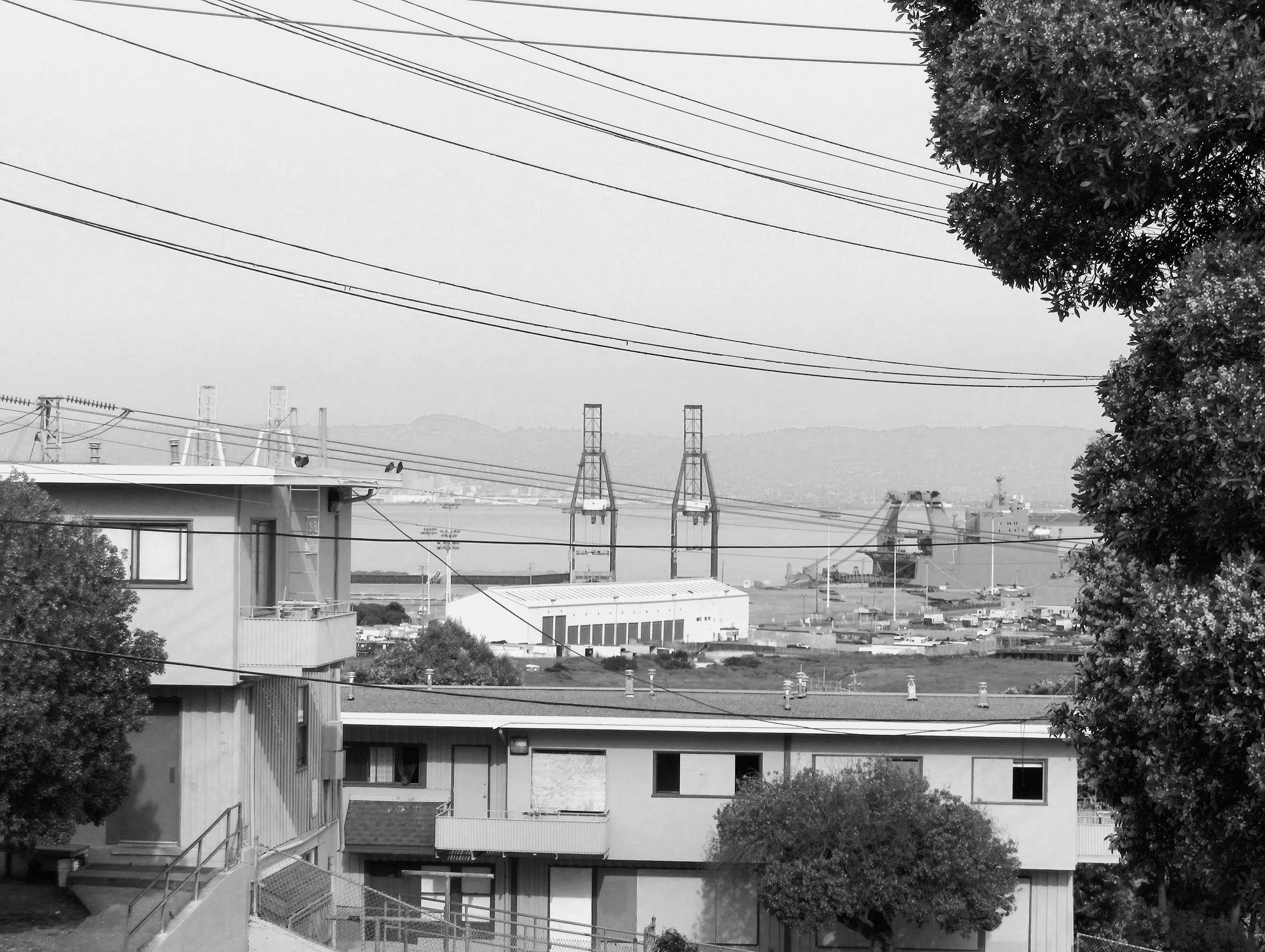
Hunters View neighborhood before redevelopment
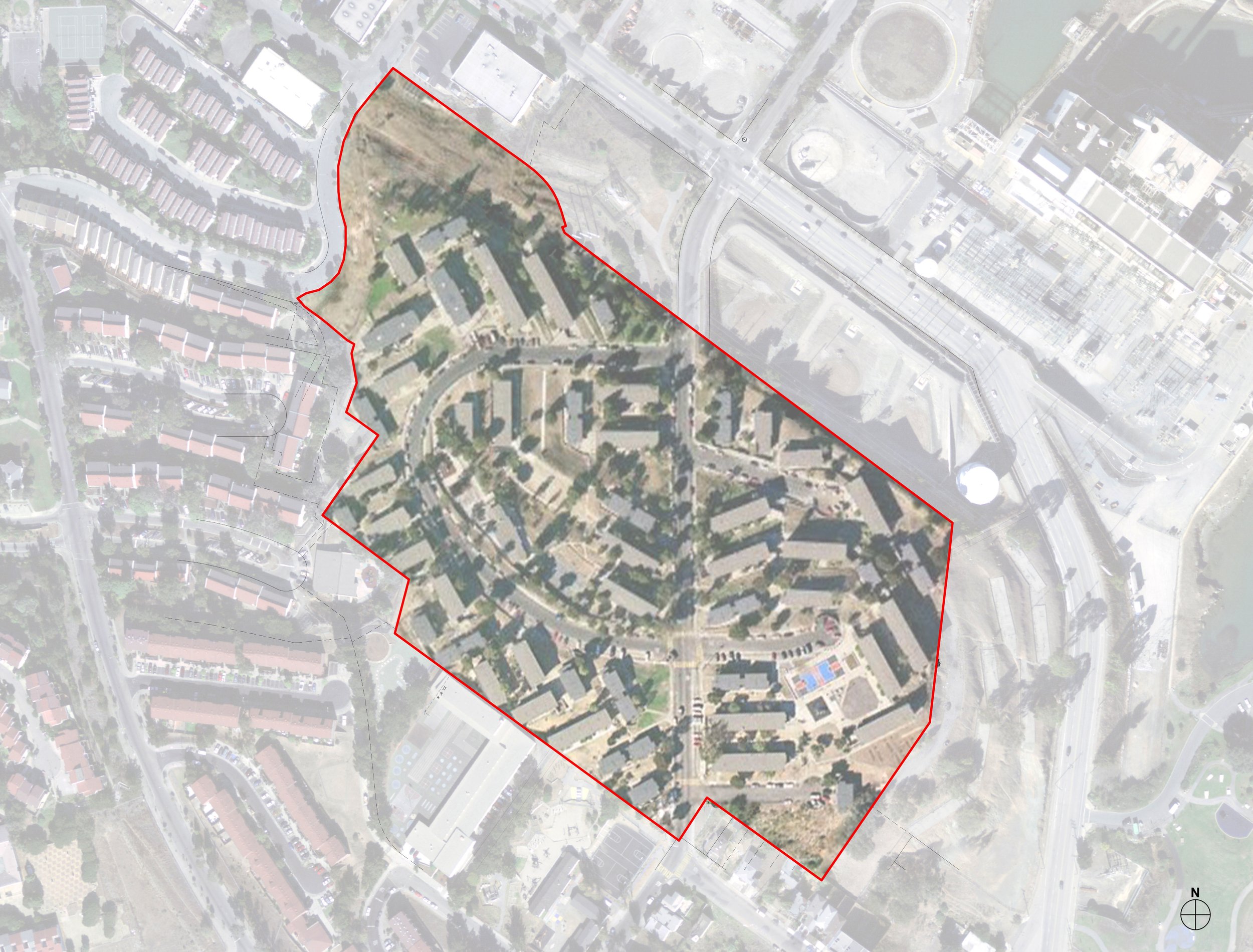
Hunters View Redevelopment Area
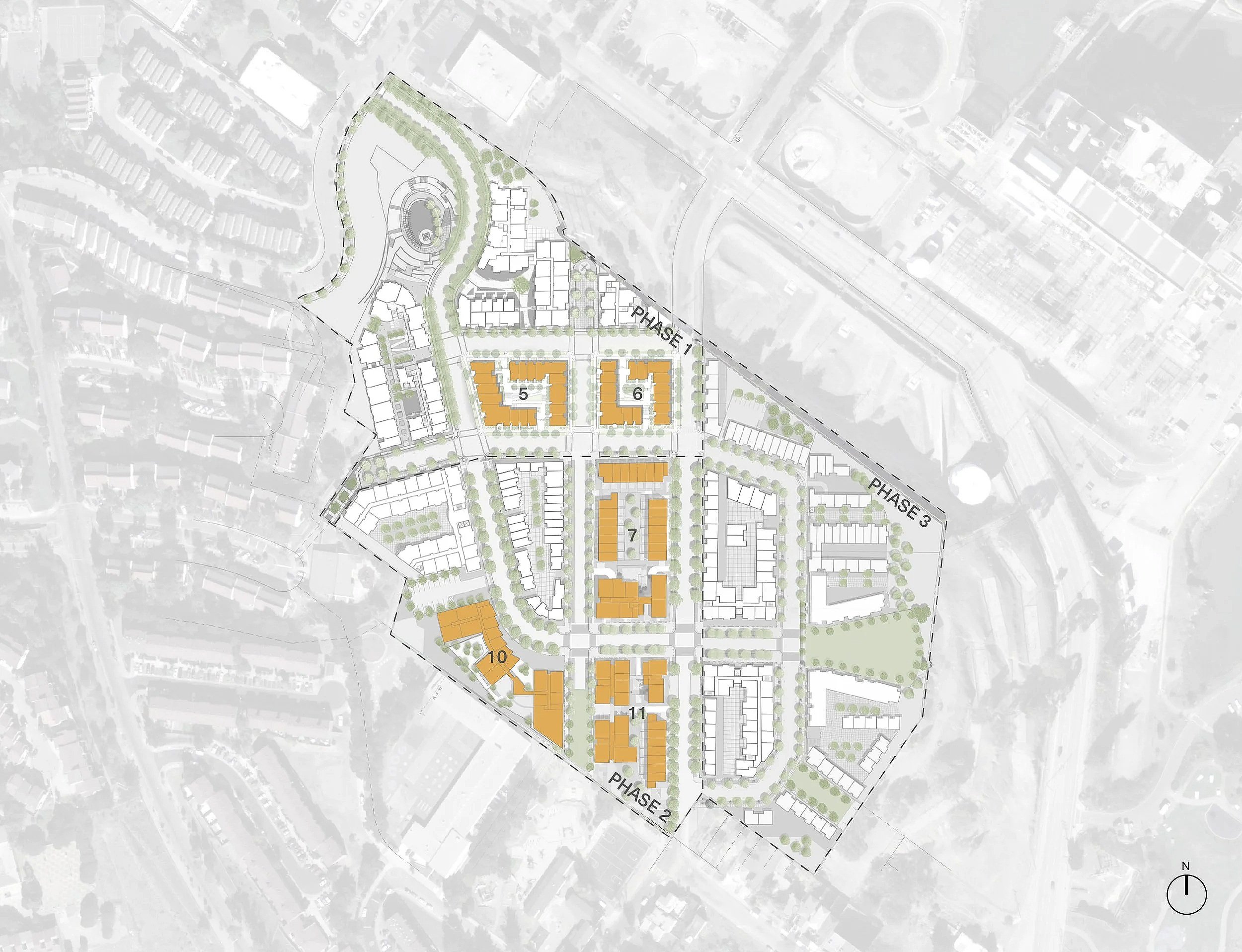
Hunters View Redevelopment Master Plan
PTA-designed projects indicated in orange
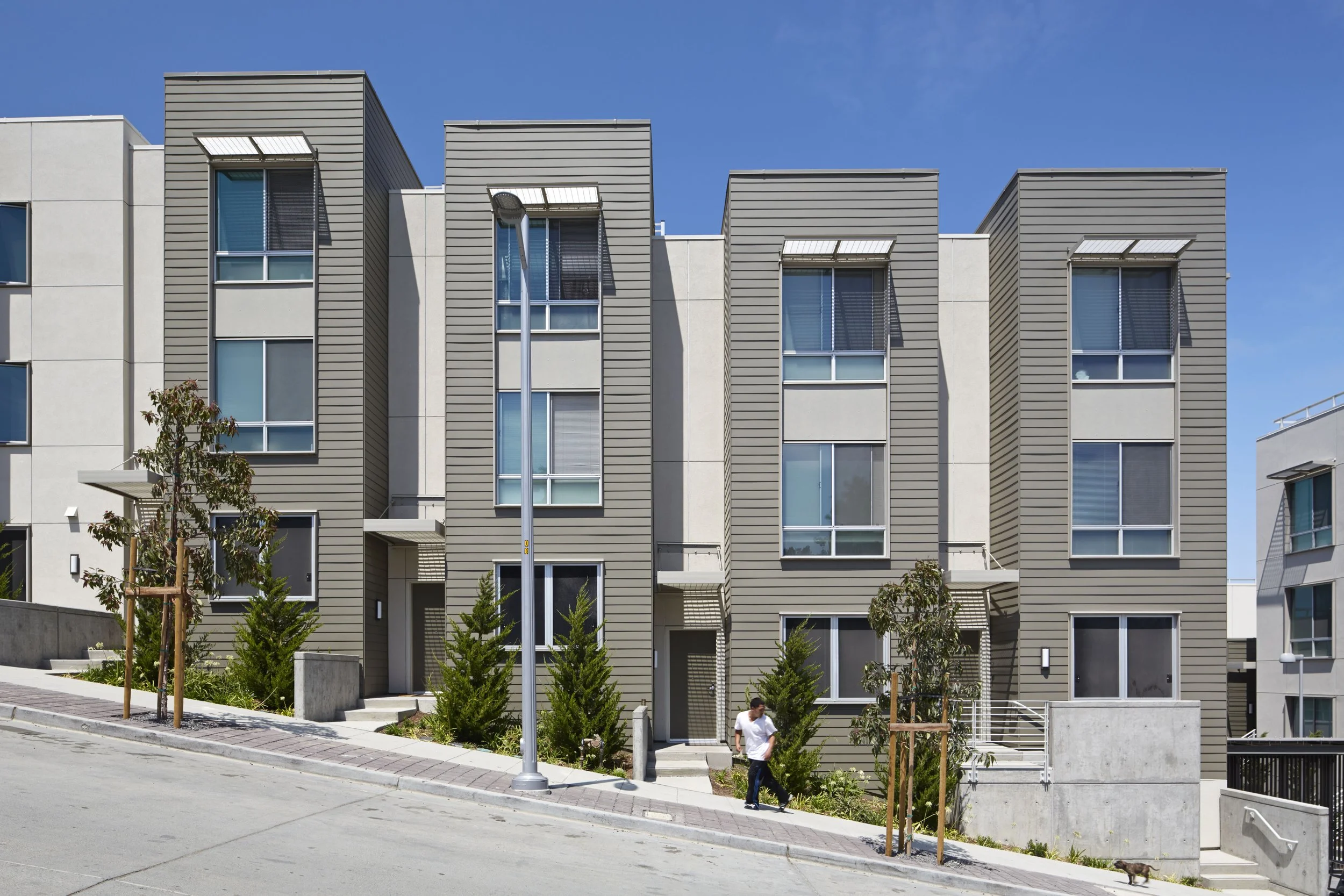
Stacked multi-level units step down the hillside, reminiscent of rowhouse urban patterns of San Francisco.
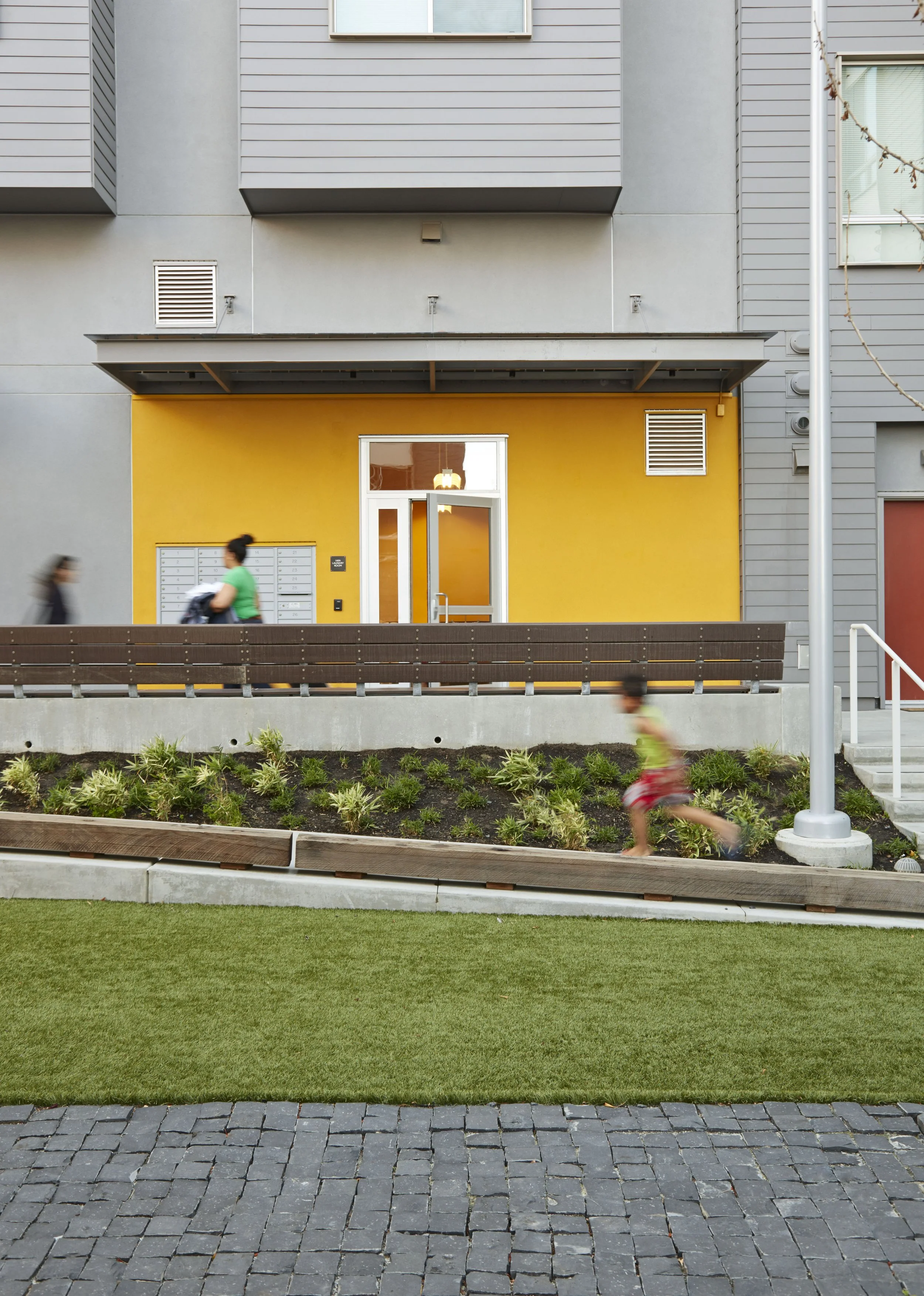
A bright accent color highlights shared resident amenity spaces within the courytard, such as the common laundry room.
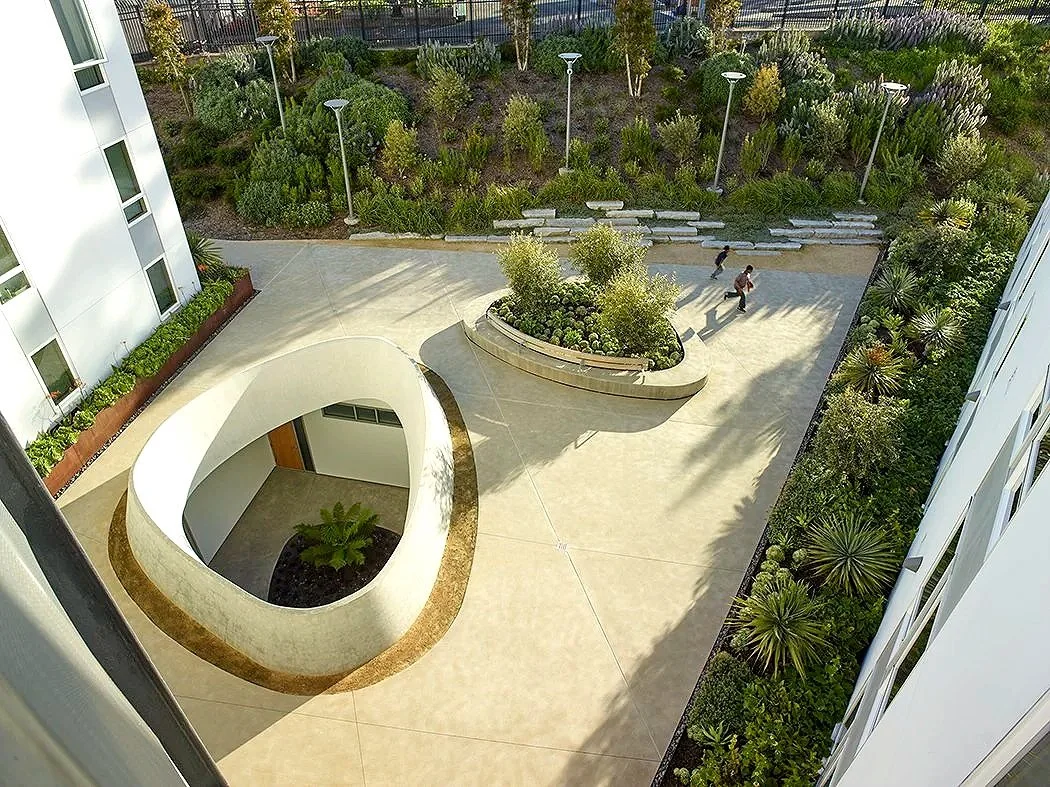
Oculus within the Level 2 resident courtyard provides natural daylight to the community center below.
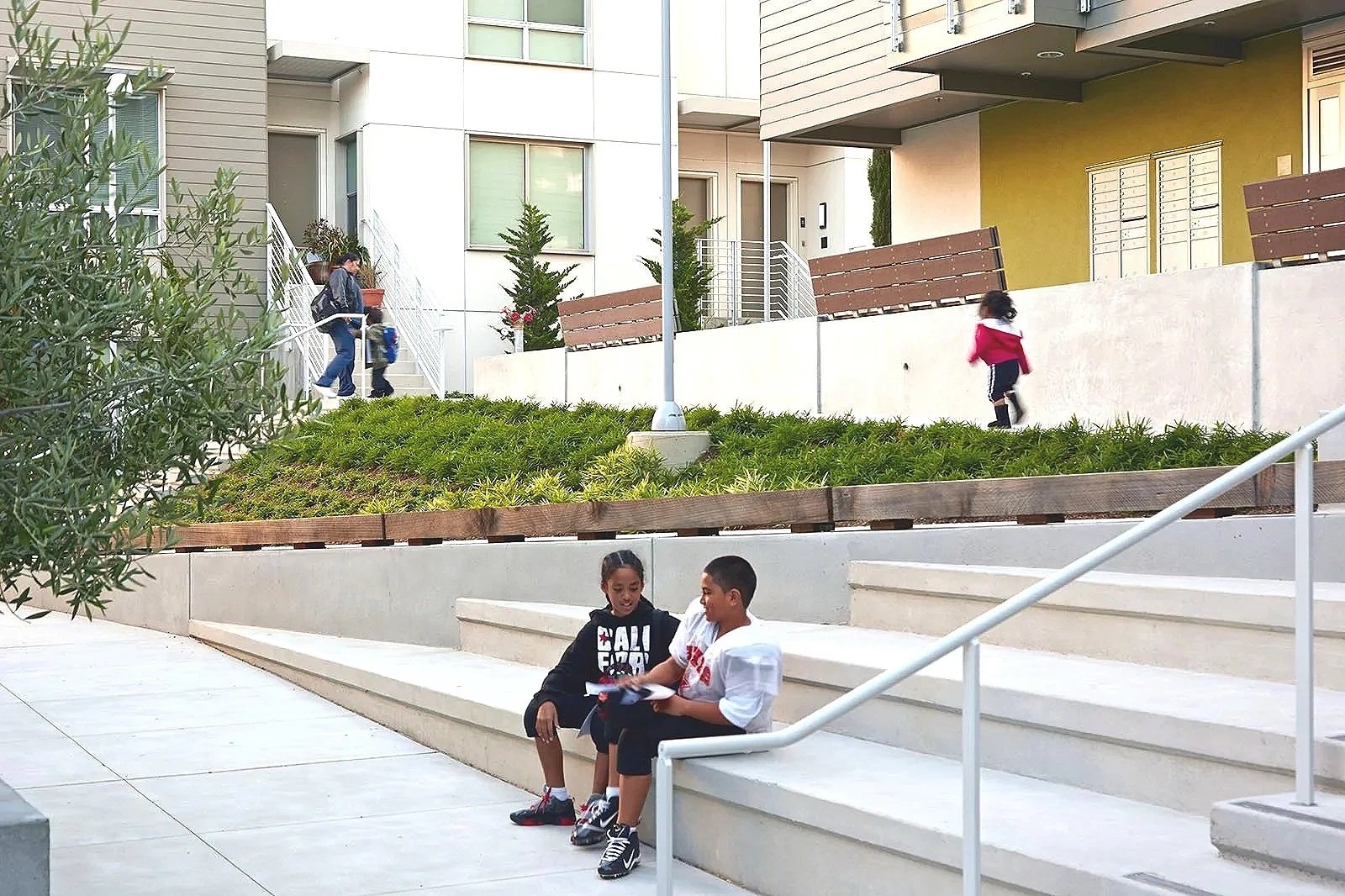
The Block 5 courtyard serves as a hub with steps and ramps that mitigate the sloping site and facilitate informal play and gathering.
Within this urban fabric, Paulett Taggart Architects developed a design for five new blocks of housing. The first two of these, Blocks 5 and 6, are located in the northern portion of the site and provide affordable units, aimed at bringing a diversity of residents into the neighborhood. Four buildings surround two mid-block courtyards, shared and secure open spaces that supplement the more public parks designated by the master plan. Designed as stacked townhomes finished in simple materials with an occasional pop of accent colors, the buildings step down along the streets in patterns typical of traditional San Francisco row housing, further connecting the neighborhood to its greater urban context and reducing the feeling of isolation.
South of Blocks 5 and 6, in the second phase of masterplan development, Blocks 7 and 11 break down the urban massing into manageable, cost-effective elements, applying lessons learned from Phase 1 sites to reduce costs at Phase 2 blocks. We situated two accessible, five-story apartment buildings on the most level part of the site along Fairfax Avenue, while row houses step down the steeper adjacent streets that run north to south. Here, materiality is a bit more varied—broad panels in deep charcoal and white, horizontal siding in a bright gray, and perforated Corten steel panels that create visual depth—lending visual interest to create a fresh and vibrant urban landscape.
Across a parklet just west of Block 11, Block 10 adds 72 additional new housing units earmarked for low-income individuals and families and serves as a community hub. A two-winged building clad in calming white, Block 10 creates its own public plaza—a central space that provides additional entry points into the residences, community center, and day care within. Inside, community members will also find a fitness room, a wellness center, a recording studio, laundry, and management and service offices. On the ground floor, a facade of colorful glazed panels make for a welcoming gesture, while the serrated form of the upper floors responds to the curve of Fairfax Avenue.
The phased nature of the masterplan development wasn’t just a logistical measure—it also significantly reduced displacement, allowing residents to stay in their homes or nearby during construction. Bike storage and connections to public transit further braid life here into the life of the city, while energy-efficient measures like solar panels, recycled materials, efficient irrigation, and high-efficiency equipment ensure longevity not only for the neighborhood, but also for its residents.
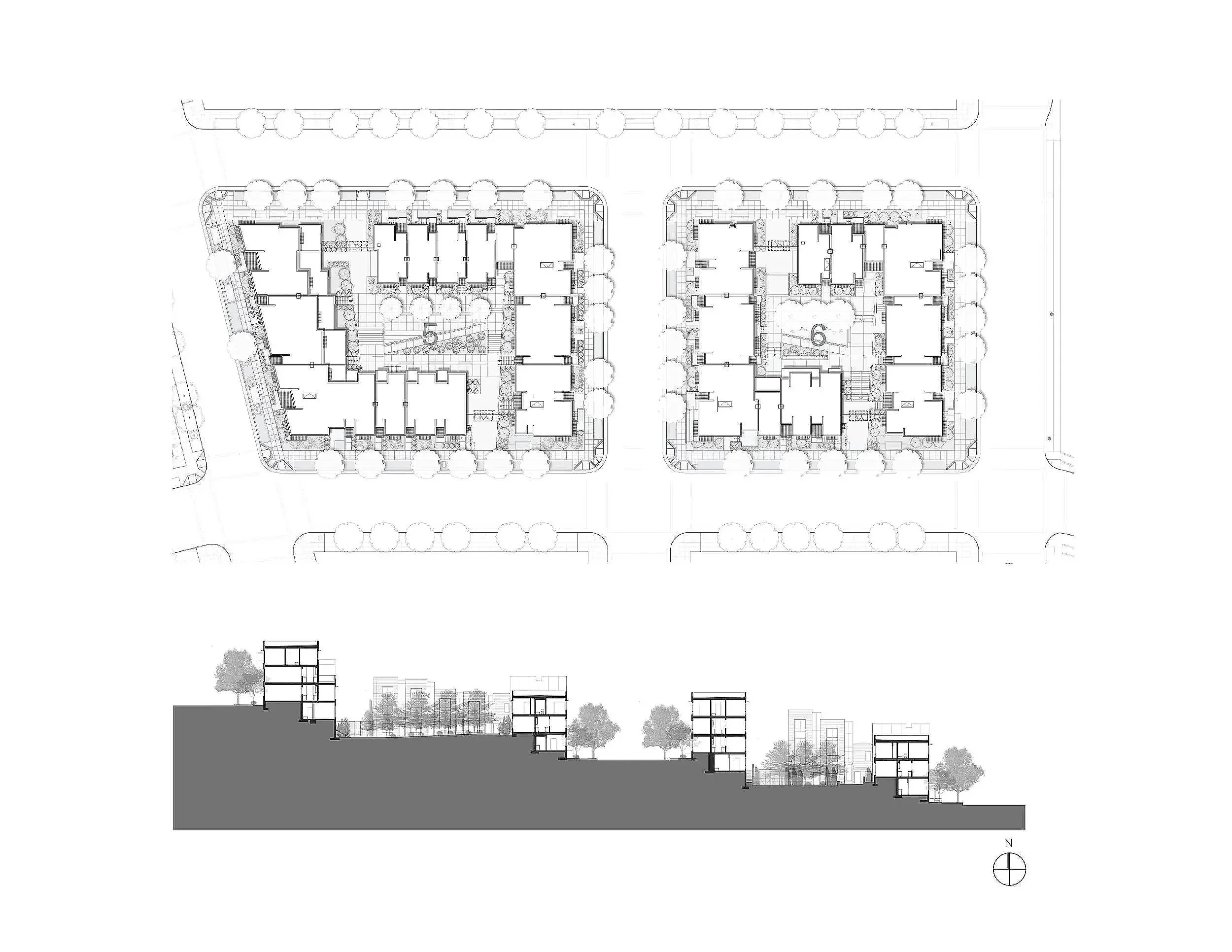
Site Section and plan
5 Block 5
6 Block 6
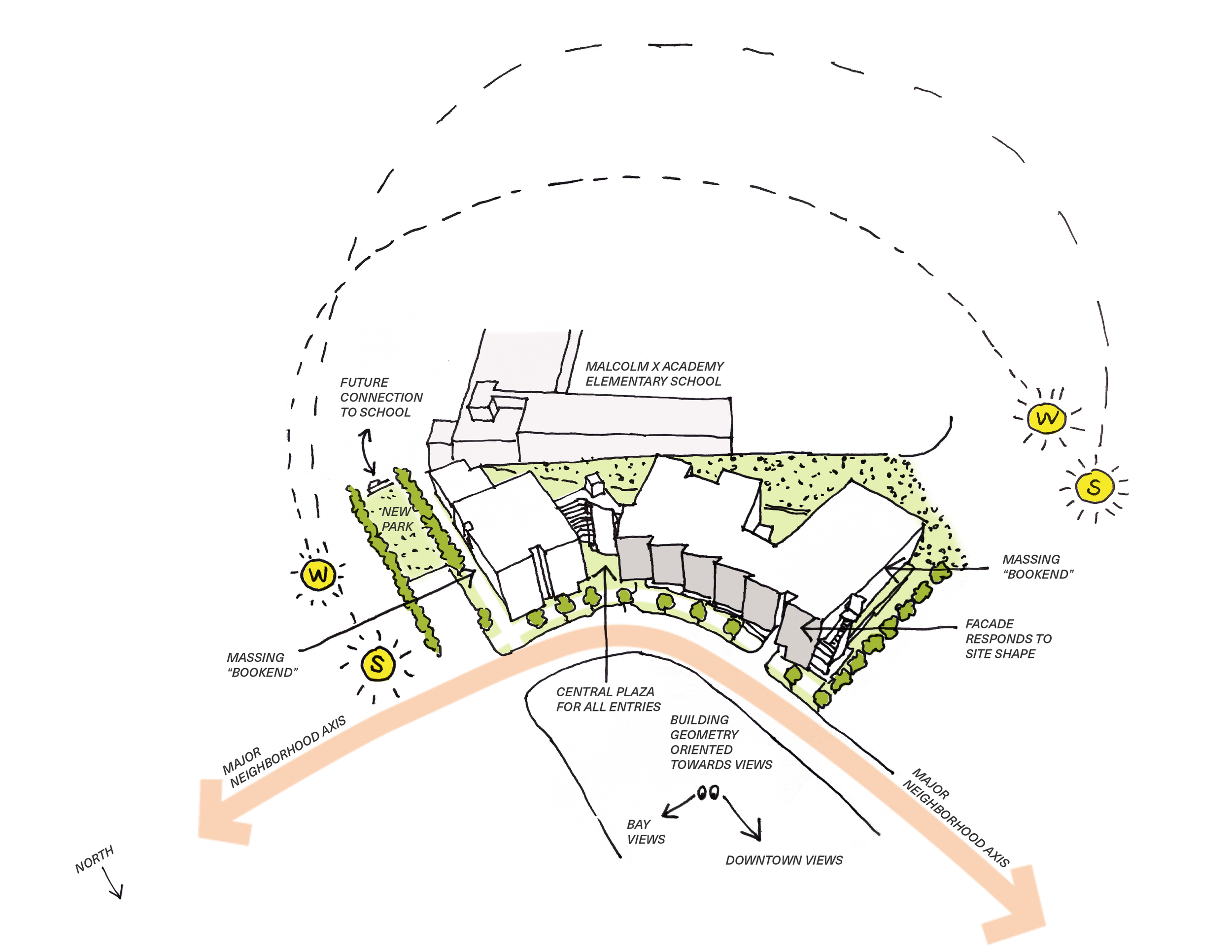
Block 10 Concept Diagram
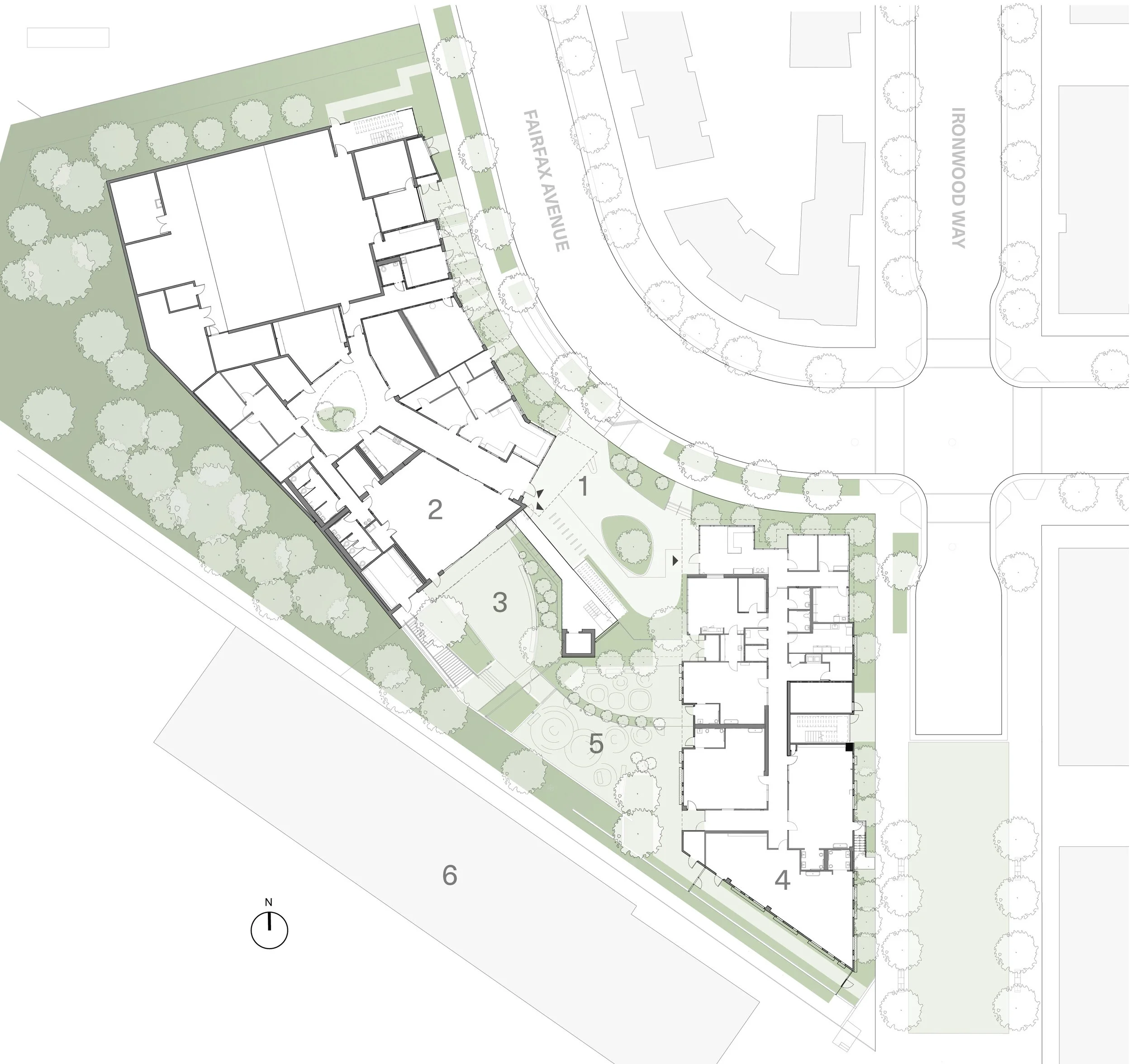
Block 10 Level 1 Plan
1 Entry Plaza
2 Resident Community Room
3 Resident Outdoor Space
4 Child Development Center
5 Child Development Center Outdoor Play Area
6 Malcolm X Academy Elementary School
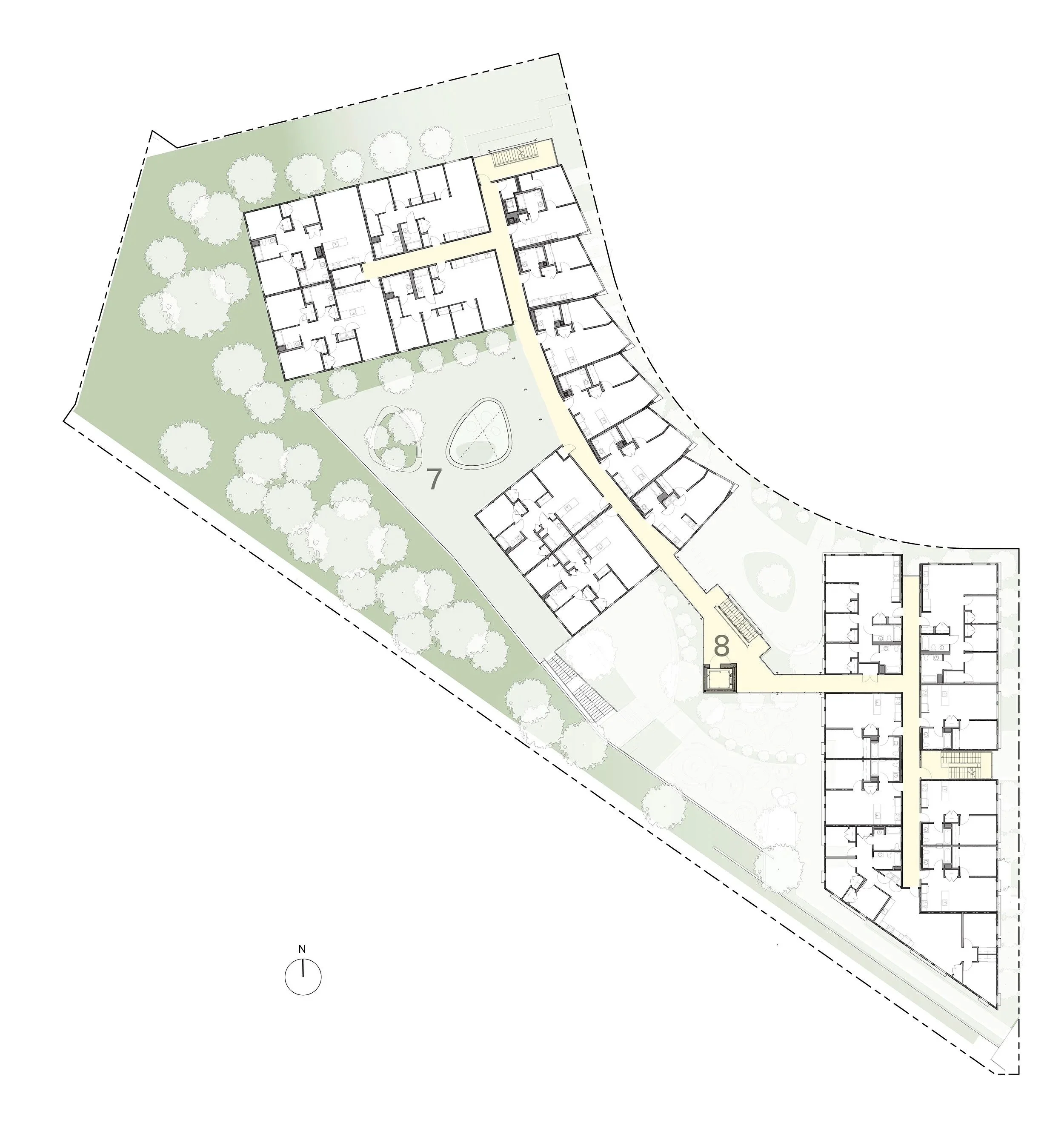
Level 2 Plan
7 Resident Courtyard with Oculus
8 External Circulation
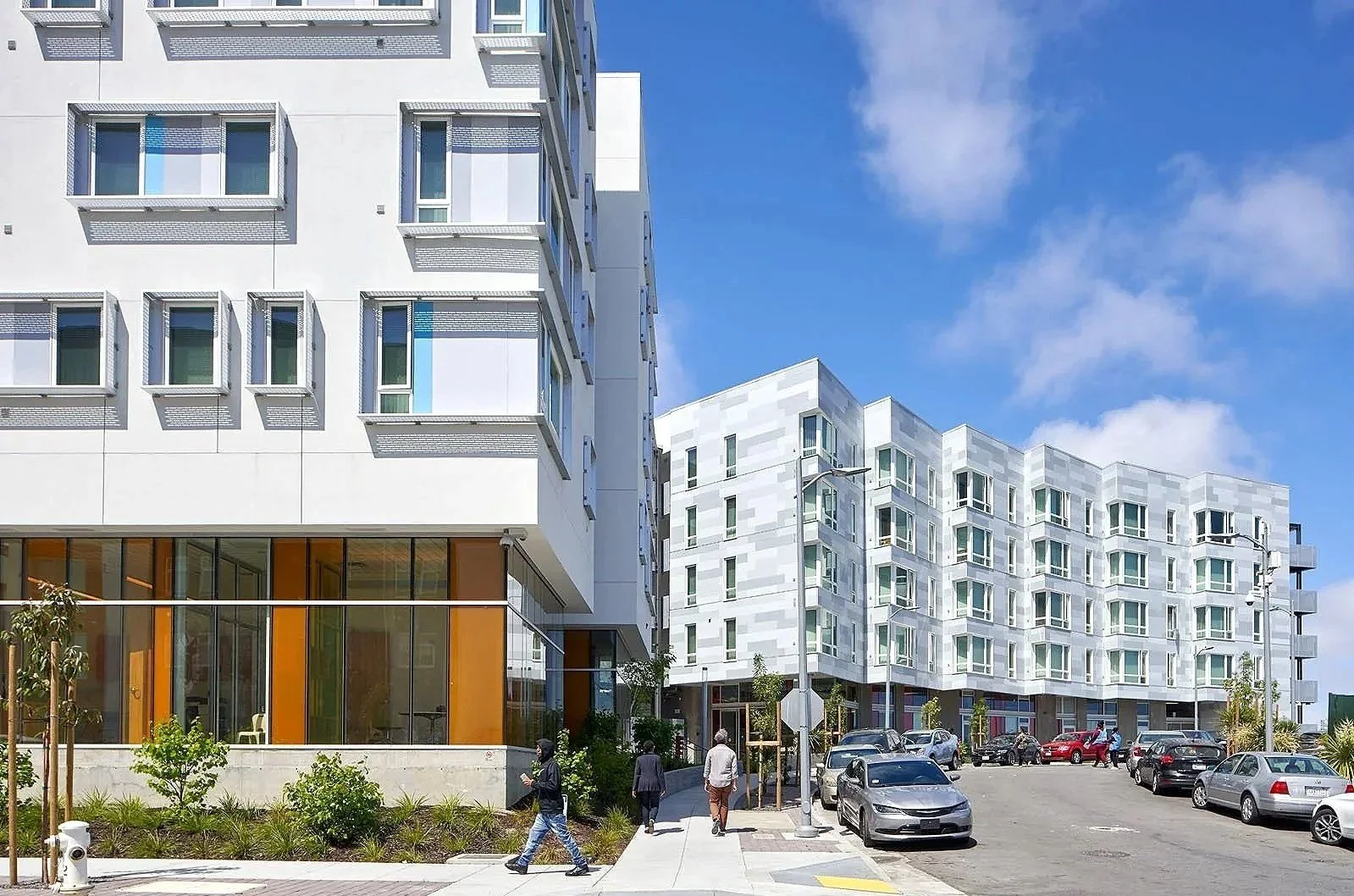
Block 10 building form responds to the curve of Fairfax Avenue.
Color of ground floor storefront glass differentiates the Child Development Center (foreground) from the Community Center.
Credits
Photograpy by Bruce Damonte