
Case Study
SRO
San Francisco, CA
2025
Challenges:
Complex historic conditions, social needs, budget deficits, housing policy requirements and limitations
Single-room occupancy hotels (SROs), or residential hotels, are a key figure in San Francisco’s urban history. As industrialization brought an influx of new San Franciscans into the city in the mid-1800s, SROs emerged as an economical and efficient housing option for low-wage workers, transient laborers, and recent immigrants from both outside and within the United States. A typical layout consists of a single room of approximately eight by ten feet, with shared toilets, showers, and kitchens.
In the 1970s and 80s, tenant activism in the city turned many SRO buildings to community and nonprofit ownership; today, of the approximately 19,000 SROs that remain in San Francisco, 6,500 are owned and managed by nonprofit organizations. These units represent one of the few remaining affordable housing options for low-income residents and seniors in the city, but many have fallen into disrepair and no longer adequately meet residents’ needs for privacy and independence.
In 2023, the collapse of Skid Housing Trust prompted nonprofits to evaluate the systemic risks and stressors typically faced by SRO properties, including vacancy, unmet capital needs, stagnant rental and operating subsidies, and rising operational costs. A study by the Tenderloin Neighborhood Development Corporation (TNDC) found that 94% of SRO properties operate at a deficit and proposed investment, design interventions, and policy changes to support SRO operations and rehabilitations.
In order to inform this report, PTA produced three distinct proposals for design interventions into existing SRO buildings: a conversion of the Union Hotel, a demolition and rebuild of the Aarti Hotel and 937 Clay Street, and a demolition, site merger, and rebuild of the Dalt and West Hotels. Each type of intervention looks to increase operational feasibility and maximize livability, building longevity, and quality.
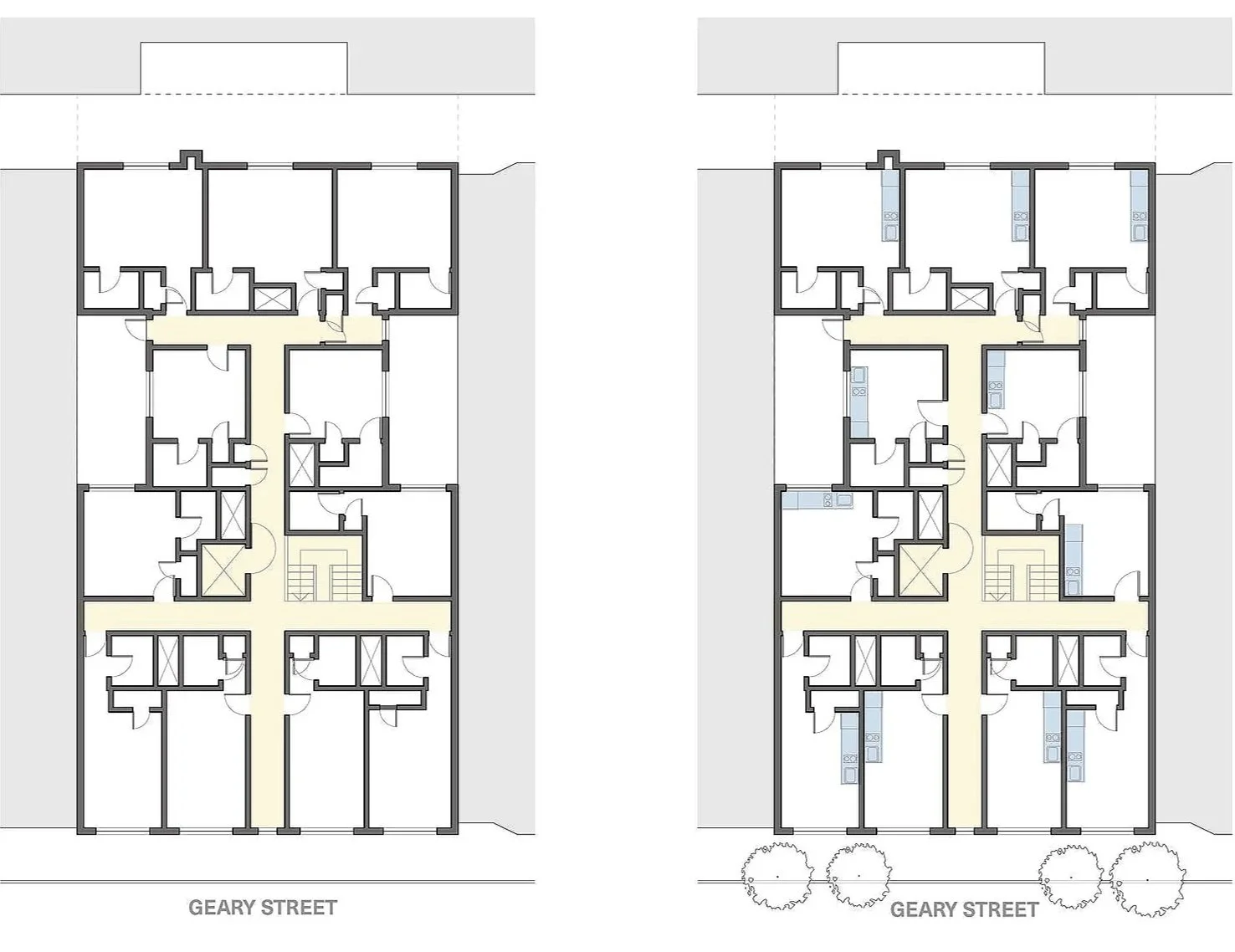
937 Clay Street
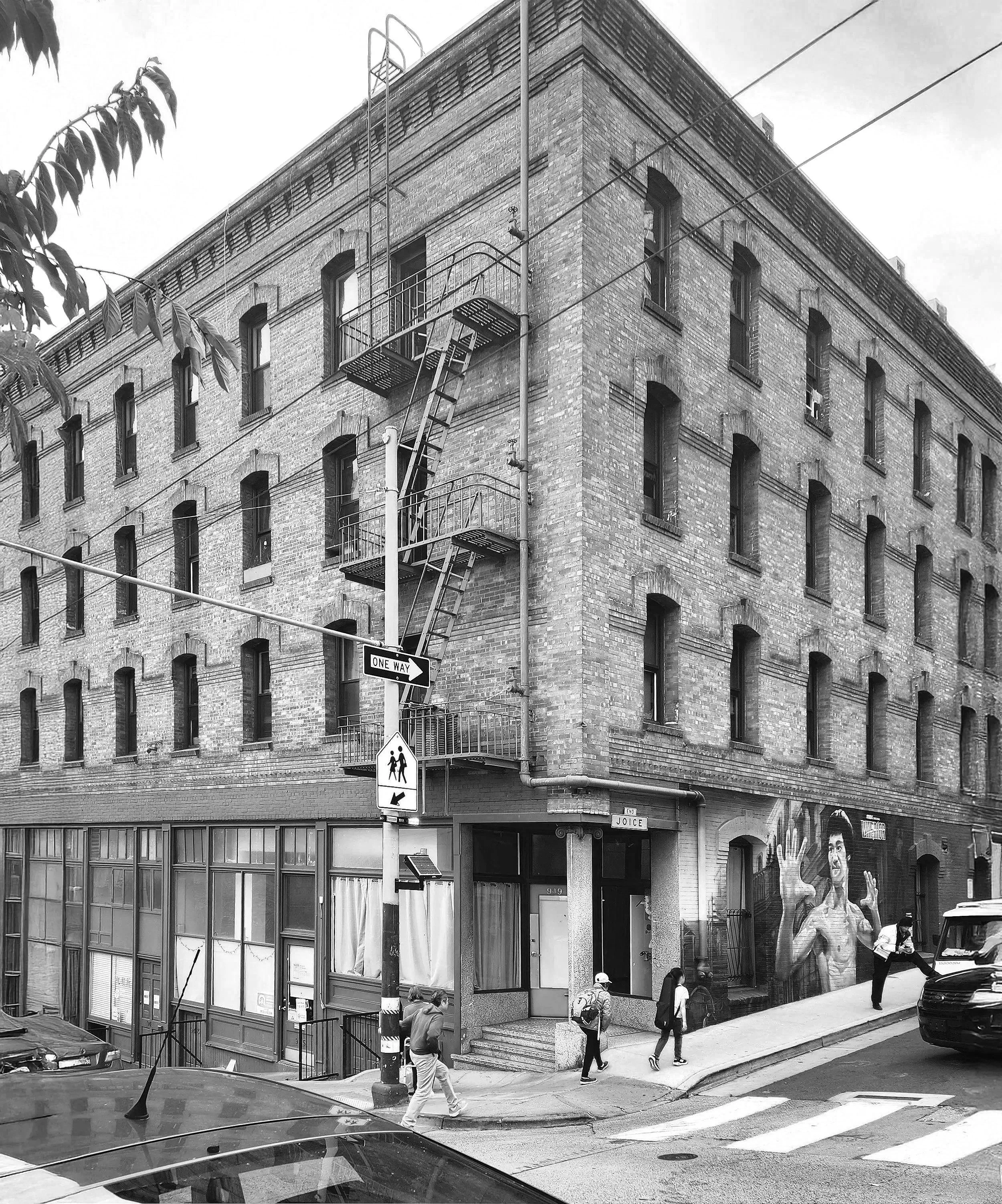
937 Clay Street, San Francisco
Existing Typical Plan
Proposed Typical Plan
(New Construction)

Aarti Hotel
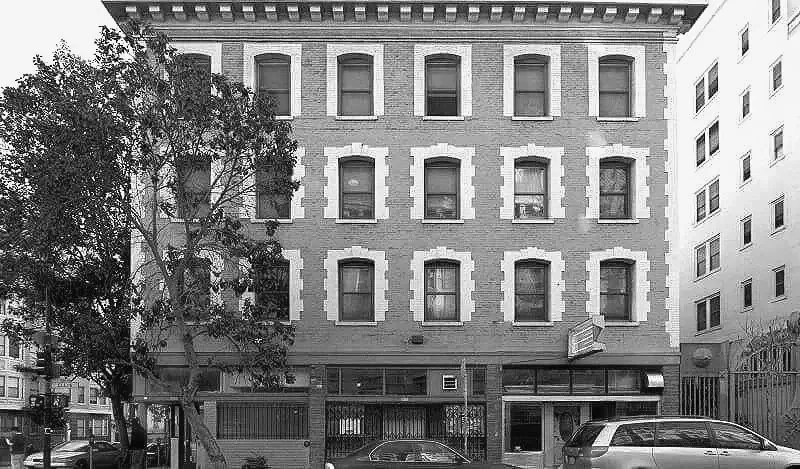
Aarti Hotel, San Francisco
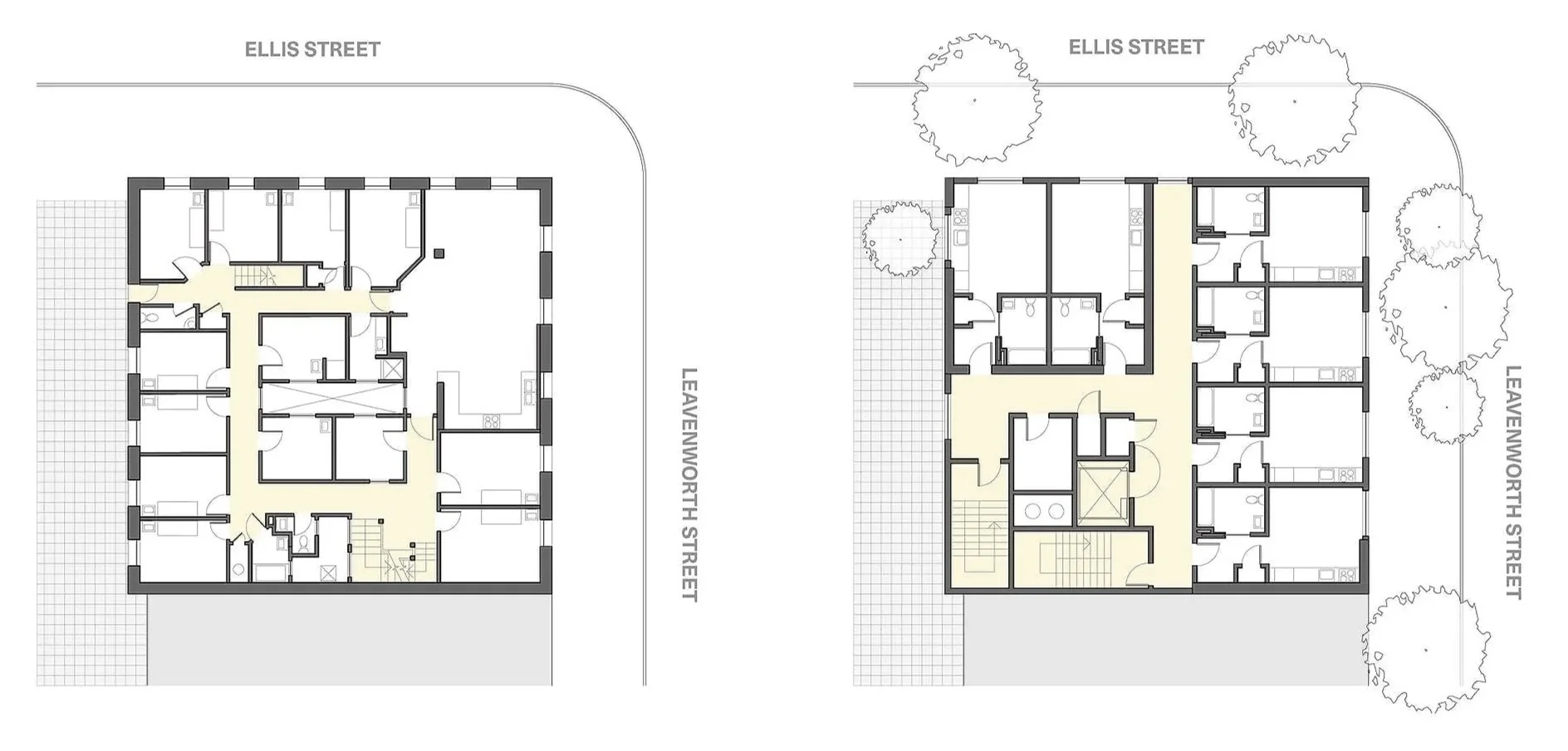
Existing Typical Plan
Proposed Typical Plan
(New Construction)
At the Union Hotel, we proposed adding a kitchenette to each of the building’s 60 units at a cost of $114,000 per unit. This highly cost-effective conversion would increase the livability of the units while maintaining density and avoiding major building interventions. At the Aarti hotel, our proposal is more extensive: a demolition of the four-story, 40-room building to make way for an eight-story midrise with 40 studios that each include a kitchenette, a private bathroom, and a closet. Because the existing zoning allows structures up to 80’ in height, this intervention would require no zoning change and cost $654,000 per unit. At 937 Clay, a Special Use District request would be required to accommodate our proposed midrise building with 61 studio apartments set over 9 stories. This would result in a reduction of 15 units from the existing 76 SROs but provide a marked increase in building quality and livability.
Our most extensive proposed intervention, at the Dalt and West Hotels, would involve the demolition of both structures, the merging of the two sites, and the building of an 85-foot, 9-story building with two outdoor courtyards to encourage outdoor recreation and draw light into interior spaces. The proposed scheme, which replaces the existing 284 SROs with 204 larger studios, would also require a Special Use District request to accommodate the increased building height.
In developing these proposals, we found a number of limitations to SRO improvement and development posed by current policy. SRO building sites often have height limitations that preclude financially feasible proposals and adequate unit replacement, and, due to their age, they’re commonly designated as historic resources, limiting redevelopment options. Additionally, 1:1 unit replacement requirements make it difficult to provide more livable spaces while keeping costs down. At the urban scale, the program that streamlines 100% affordable housing does not include projects on lots smaller than 8,000 square feet, a measure that excludes many SRO properties. Given these hurdles, two of our four case study buildings could only be redeveloped via pursuit of a Special Use District approval from San Francisco Planning.
In order to improve the quality of SRO properties and bolster San Francisco’s affordable housing stock, we recommend a number of policy changes: introducing height-limit exceptions, including 100% affordable housing projects on lots smaller than 8,000 square feet in the streamlining program, allowing the demolition of residential units where new 100% affordable housing units are submitted in replacement, and allowing adverse impact on historic resources for SRO buildings seeking to improve the livability of units.
Union Hotel
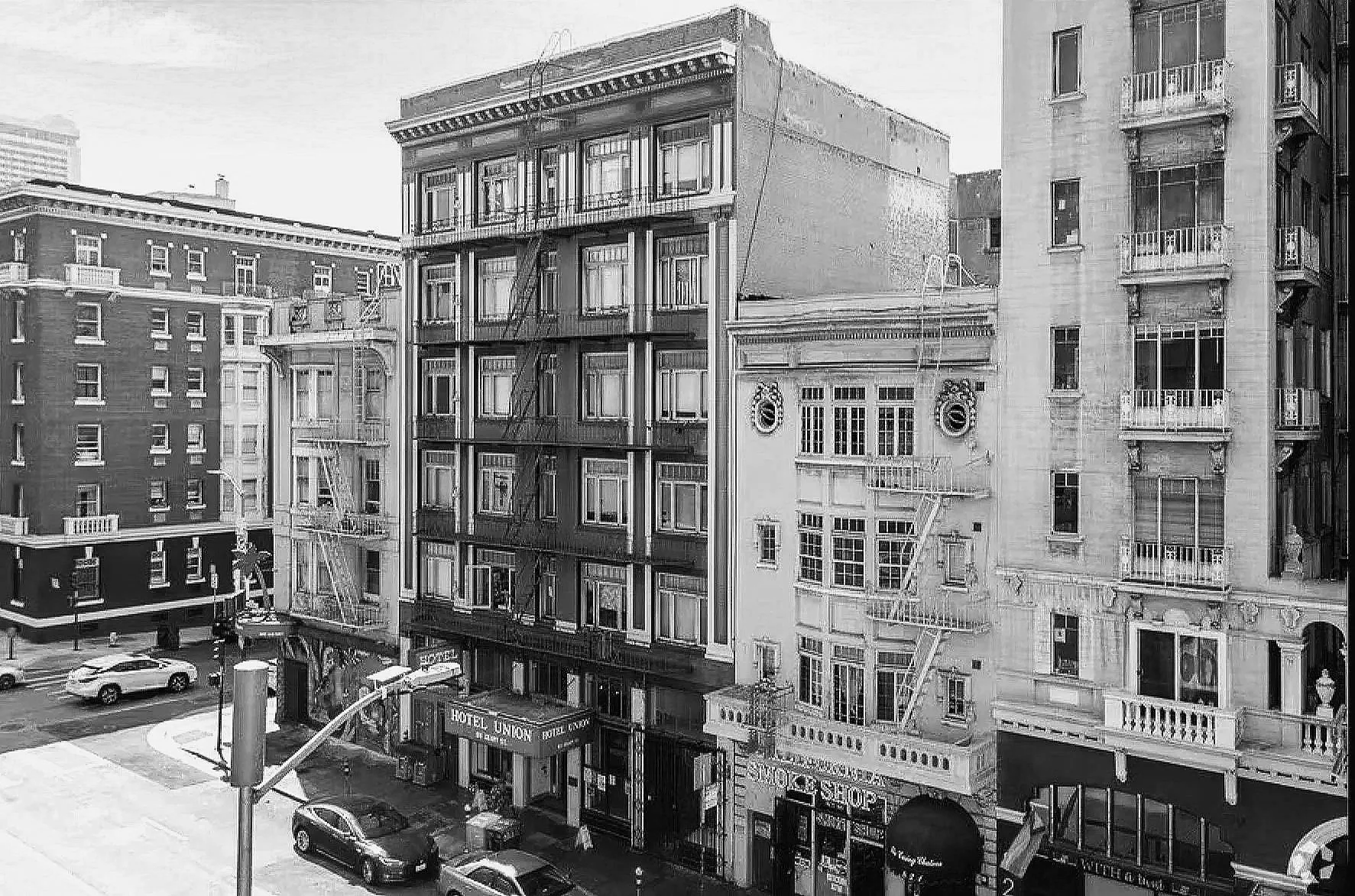
Union Hotel, San Francisco
Existing Typical Plan
Proposed Typical Plan
(New Construction)

Dalt and West Hotels
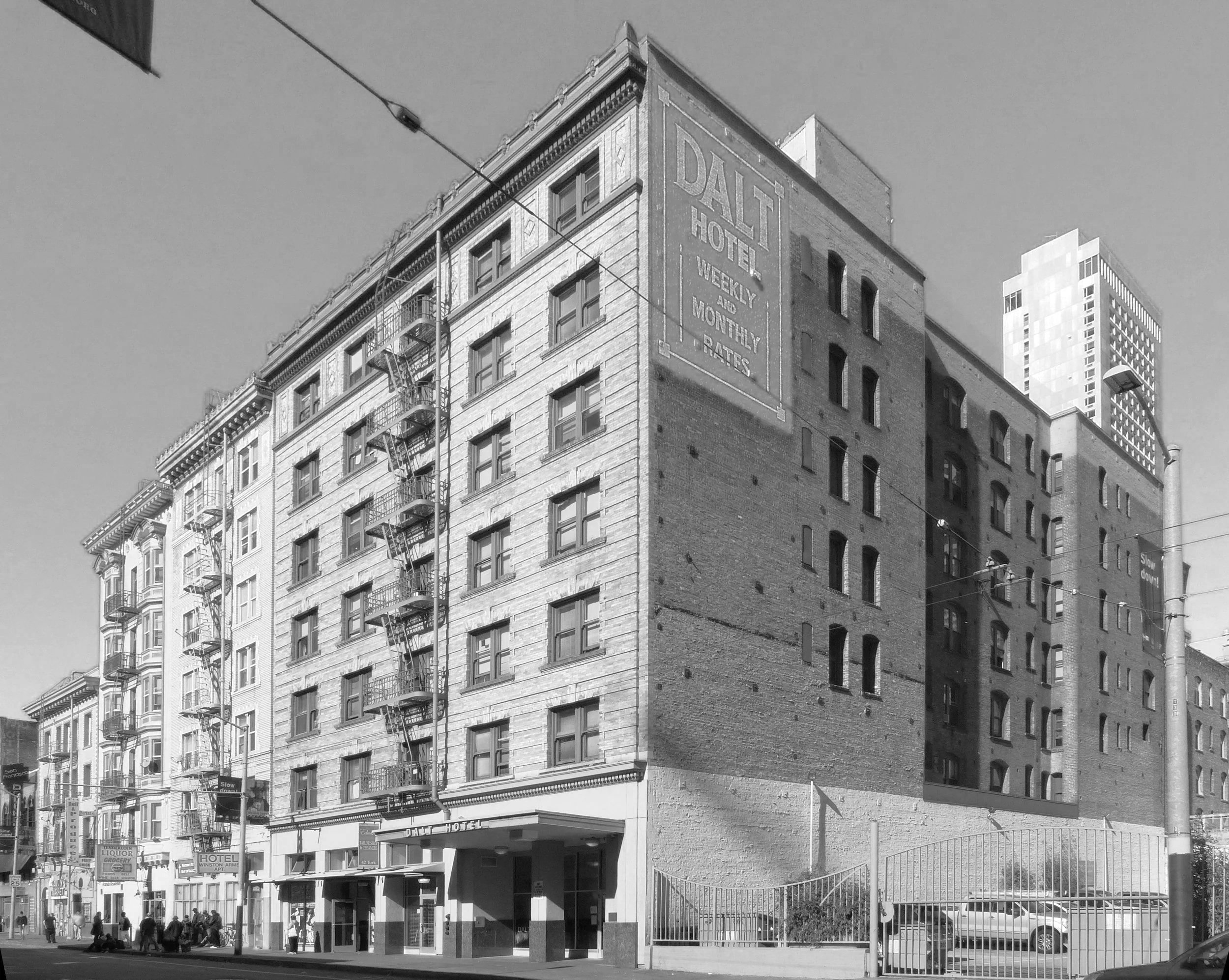
Dalt and West Hotels, San Francisco
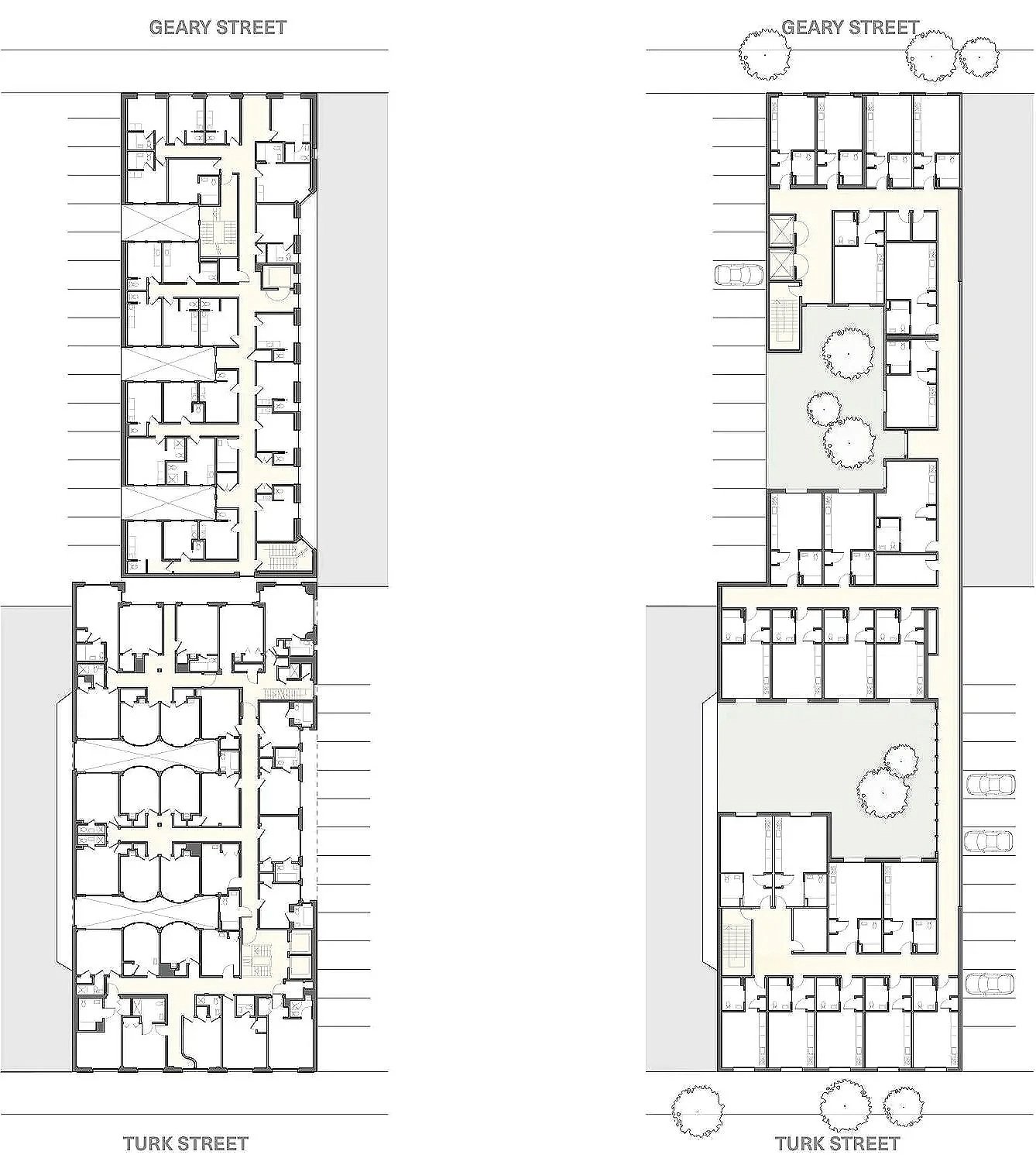
Existing Typical Plan
Proposed Typical Plan
(New Construction)